How much Bacteriostatic Water is Needed for Peptide Reconstitution New Zealand?
How well peptides operate depends critically on how they are reconstituted (adding Bacteriostatic or Sterile water) and maintained. There is a risk of damaging or degrading peptides if storage or reconstitution is not done correctly.
Bacteriostatic antibiotics work similarly by hindering the growth of bacteria. Still, in this case, we’re concerned with peptides and their delicate nature, which requires maintaining bacterial protein production to ensure efficacy.
The majority of the research chemicals are lyophilized compounds. This expression denotes that they are reduced to a crystalline powder through freeze-drying. Therefore, you must add Bacteriostatic or Sterile Water to peptides before using them, as reconstitution plays a pivotal role in the mechanism of action.
Understanding the mechanism of action of these compounds is crucial, as incorrect reconstitution can cause peptides to become inactive, much like bactericidal antibiotics fail when they don’t adequately target their intended pathogens. The lowest concentration of water needed for reconstitution must be used to avoid unwanted dilution, ensuring the peptide maintains its bacteriostatic activity.
Reconstituting Peptides New Zealand
To reconstitute peptides, you will need:
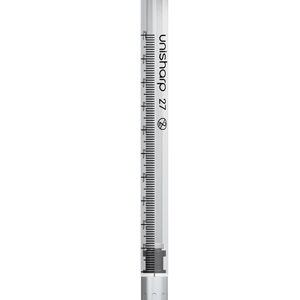
- A sterile syringe
- Your chosen peptide
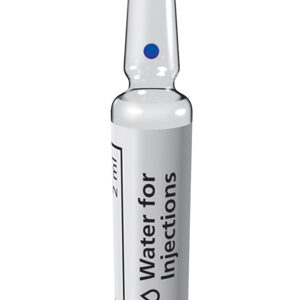
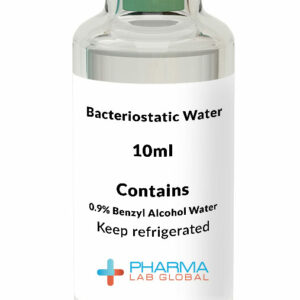
- Sterile or Bacteriostatic Water
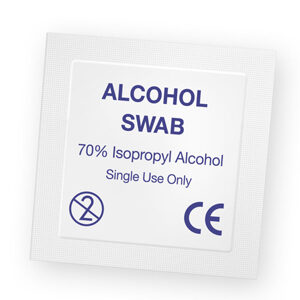
- Alcoholic Wipe

Shop all Peptide Consumables online from Pharma Lab Global New Zealand, supplier of high quality peptides and consumables for research purposes. The bacteriostatic agent in the water helps minimize bacterial contamination, which is essential for maintaining long-term stability, much like how antimicrobial agents target bacterial infections in clinical treatments.
The alcohol wipe is to clean vials before starting the peptide reconstitution. Then, the process is to draw sterile or bacteriostatic water using the syringe. The needle is sterile, so it shouldn’t be touched to avoid contamination and reduce the risk of infection.
Depending on the bacterial cells and the mg of the peptide, cell growth will require varying amounts of bacteriostatic or sterile water.
The next step is to insert the syringe into the peptide vial immediately. Don’t carelessly squirt water into the vial. Slowly pour the water into the glass of the vial rather than directly on the peptide.
By doing this, the reconstitution process will start without damaging the peptide product. Take the syringe out of the peptide vial after adding the bacteriostatic water solution or sterile water into the peptide vial. Do not shake the vial.
Bacteriostatic Or Sterile Water?
Bacteriostatic water differs from sterile water in that it can be used multiple times over 28 hours. Bacteriostatic water is pretty well-liked among New Zealand scientists for this reason. It is regarded as a non-pyrogenic solution since it doesn’t cause heat or fever when administered to the body.
About 0.9% of it is benzyl alcohol – aromatic alcohol. They are chemical compounds with an indirect link between an aromatic molecule and a hydroxyl group. It smells good as a result of this. The purpose is to ensure that bacteria cannot grow in the liquid. Due to its versatility and ability to be used repeatedly, it is easier to use.
New Zealand Studies show sterile water also offers advantages of its own. This liquid is also non-pyrogenic. In contrast to bacteriostatic water, sterile water may only be used once and must be discarded after use. However, this is an excellent alternative to bacteriostatic water when the body doesn’t respond well to it.
How To Store Your Peptides?
Whether they are reconstituted or not, the performance of peptides depends on how they are stored. The temperature when they are reconstituted vs when they are still in lyophilized state, differs significantly.
The general rule of thumb is to keep a temperature between 36 and 46 degrees Fahrenheit when in lyophilized form or reconstituted form. For those who use Celsius, that translates to a range of around 2 to 8 degrees. This frequently entails freezing it, which is an entirely acceptable choice.
Maintaining proper storage of bacterial cellular activity during reconstitution is key. If stored incorrectly, the peptides, much like bacterial protein synthesis pathways, may fail to produce the desired biological outcomes.
Moreover, researchers must be cautious when working with peptides in conditions that mimic immunodeficiency or other compromised immune states, as these could lead to unintended adverse effects. Proper storage ensures the minimum inhibitory concentration (MIC) of peptides remains intact, much like how bactericidal antimicrobials work to prevent bacterial death at a specific MIC.
Explore peptide research Consumables for all your reconstitution requirements.
References:
[1] Lale SV, Goyal M, Bansal AK. Development of lyophilization cycle and effect of excipients on the stability of catalase during lyophilization. Int J Pharm Investig. 2011 Oct;1(4):214-21.
[2] Deni WH, Gao T, Wu J. Protocol for reconstituting peptides/peptidomimetics from DMSO to aqueous buffers for circular dichroism analyses. STAR Protoc. 2024 Mar 15;5(1):102850.
[3] Hu J, Kyad A, Burke K, Sakiyama L, Moraes De Souza C, Pope S, Blue L, Cohen D, Semin D, Goudar C. Critical Aspects of pH Measurement for Bacteriostatic Water for Injection. J Pharm Sci. 2023 Aug;112(8):2307-2310.
Peptide Reconstitution FAQs
What is bacteriostatic water, and why is it used for peptides?
A sterile water solution with 0.9% benzyl alcohol that stops bacterial growth is called bacteriostatic water. Because it keeps peptides stable and sterile over time, it is frequently utilized for reconstitution. Because of this, it is perfect for research applications where peptides must be used and stored for an extended period of time without becoming contaminated.
How does bacteriostatic water differ from sterile water?
Bacteriostatic water can be used repeatedly over a 28-day period because it includes 0.9% benzyl alcohol, which functions as a preservative to stop bacterial development. Sterile water, on the other hand, has no additives and needs to be used very away after opening because it doesn’t have a preservative to avoid contamination. Sterile water is usually utilized for single-use applications, but bacteriostatic water is more adaptable for many uses.
Can I use sterile water instead of bacteriostatic water for peptides?
Although it has limitations, sterile water can be used in place of bacteriostatic water for peptides. Sterile water must be used right away and cannot be kept for several uses, in contrast to bacteriostatic water, which has a preservative to stop bacterial development. Because of this, bacteriostatic water is a preferable choice for preserving peptide stability throughout time, particularly for studies that call for frequent use.
How should reconstituted peptides be stored?
To preserve stability and efficacy, reconstituted peptides should be kept in a refrigerator between 2°C and 8°C (36°F and 46°F). To avoid contamination, make sure the vial is properly sealed and keep it away from heat and light. Certain peptides may be frozen for long-term preservation, but always adhere to the particular storage instructions for the peptide in question.
Why is it important to avoid shaking the peptide vial during reconstitution?
Avoiding shaking the peptide vial during reconstitution is crucial to prevent damaging the delicate peptide molecules. Vigorous shaking can cause the peptides to denature or degrade, reducing their effectiveness. Instead, gently swirling or tilting the vial ensures the solution mixes evenly without compromising the peptide’s stability and efficacy.
ALL PRODUCT INFORMATION AND ARTICLES ON THIS SITE ARE FOR EDUCATIONAL PURPOSES ONLY
DISCLAIMER: All products sold by Pharma Lab Global are for research and laboratory use only. These products are not designed for use or consumption by humans or animals. They are not to be classified as a drug, food, cosmetic, or medicinal product and must not be mislabelled or used as such. By purchasing from our Website the buyer accepts and acknowledges the risks involved with handling of these products. All articles and product information provided on this Website are for informational and educational purposes only. Handling and use of these products should be restricted to suitably qualified professionals.
-
15% OFF MULTI PACK
Bacteriostatic Water
£5.50 – £52.70Price range: £5.50 through £52.70 Select options This product has multiple variants. The options may be chosen on the product page -

Pre-injection alcohol swabs
£5.50 Add to cart -
2ml Sterile Water
£1.46 – £9.50Price range: £1.46 through £9.50 Select options This product has multiple variants. The options may be chosen on the product page -

1ml 27G fixed needle Empty Syringe
£0.30 Add to cart
![Buy P-21 Peptide [name] at Pharma Lab Global](https://new-zealand.pharmalabglobal.com/wp-content/uploads/2025/05/P-21-Peptide-for-its-Bioactive-Potential-300x200.webp)
![Explore Narcolepsy Treatment [name] at Pharma Lab Global](https://new-zealand.pharmalabglobal.com/wp-content/uploads/2025/06/Narcolepsy-300x200.webp)